

Digital transformation in healthcare is no longer optional. It is now a clinical and operational necessity. Whether you are a chief medical officer leading a large hospital system or a CEO approaching your first major technology investment, one thing is clear: the gap between digitally advanced and lagging hospitals is widening rapidly.
Consequently, this divide is having a direct impact on patient safety, financial performance, and accreditation outcomes. this guide brings together peer-reviewed research, global benchmarks, and real implementation experience. Ultimately, it provides a clear, decision-ready framework—not just a list of technologies.
| $16.9B Projected digital health market by 2033TechSci Research | 32% Reduction in diagnostic errors with EHRScienceDirect, 2025 |
| $7.4M Avg cost of a healthcare data breach (2025)IBM MEA 2025 | 65% Hospitals accelerated digital adoption post-COVIDDeloitte, 2020 |
What Is Digital Transformation in Healthcare?
Digital transformation in healthcare is a wide re-design for the system of care delivery powered by technology, not just the adoption of new software, it is a planned and complex process that integrates digital tools to improve efficiency, patient safety, and population health outcomes.
Digitisation vs. Digitalisation vs. Digital Transformation
Understanding where your hospital sits on the digital maturity ladder is the first step toward meaningful transformation not just technology adoption.
| Term | What It Means | Hospital Example |
| Digitisation | Converting analogue content to a digital format | Scanning paper patient notes to PDFs |
| Digitalisation | Using digital data to optimise existing processes | EHR-triggered medication safety alerts |
| Digital Transformation | Rethinking care delivery models with technology as the foundation | Replacing verbal discharge instructions with a multilingual digital education platform, generating real-time HCAHPS and accreditation documentation |
Why Hospital Leaders Cannot Afford to Wait
Four converging pressures have made digital transformation in healthcare an immediate board-level priority: rising patient expectations around digital access, surging non-communicable disease burden, tightening accreditation standards, and intensifying competition from peer institutions and new market entrants.
| 93% of healthcare executives report innovating with urgency on digital transformationAccenture Digital Health Vision | 65% of health organisations accelerated digital adoption post-COVID-19Deloitte, 2020 |
| 72% of adults would use technology to avoid a hospital admissionNHS Confederation / Google, 2024 | 18–24% CAGR of the regional digital health market through 2033TechSci Research, 2025 |
The 7 Core Pillars of Digital Transformation in Healthcare

Digital transformation in healthcare is an architecture of interconnected capabilities, not a single technology purchase as hospital leaders should benchmark their organisation across all seven before setting investment priorities.
1. Electronic Health Records (EHR) & Clinical Data Infrastructure
EHRs are the data backbone of a digital hospital, enabling real-time access to the longitudinal patient record, integration across pharmacy and laboratory systems, and the clinical data layer that powers every subsequent digital initiative, from AI diagnostics to patient education personalisation.
The safety case is quantified: a 2025 meta-analysis found that EHR implementation correlates with a 32% reduction in diagnostic errors and 26% fewer medication errors versus paper-based systems, representing hundreds of avoided adverse events annually in a 400-bed facility.
| Where Most EHR Implementations Fail, Alert fatigue, copy-paste documentation errors, and workflow mismatches are well-documented failure modes of under-trained EHR rollouts.Structured clinical training is not an add-on, it determines safety outcomes. |
For healthcare interoperability, hospitals should require HL7 FHIR-compliant APIs in every EHR procurement, ensuring that patient data flows seamlessly between care settings, pharmacy networks, and patient-facing platforms. See AMPM’s EMR integration layer →
2. Artificial Intelligence & Clinical Decision Support (CDSS)
AI-powered clinical decision support systems (CDSS) have transitioned from pilot stages to essential workflow infrastructure. Leading hospital systems now actively deploy these technologies for sepsis early warning, AI-assisted radiology, clinical documentation (via NLP), and predictive readmission modeling.
However, success in is not universal. McKinsey’s analysis indicates that organizations capturing the most value are those that:
- Measure ROI incrementally
- Prioritize projects with clear clinical or operational metrics.
- Resist large-scale initiatives that lack defined accountability.
Consequently, hospital CMOs should focus on high-impact, practical entry points—specifically medication reconciliation, sepsis prediction, and diagnostic imaging before eventually expanding into population health analytics and predictive discharge planning.
3. Telehealth & Virtual Care Models

Telehealth has permanently entered the care delivery mainstream. Mature virtual ward programs report that one avoidable non-elective admission is prevented per virtual ward admission, according to NHS England analysis, a direct impact on bed occupancy, waiting times, and operational costs. For hospitals managing high volumes of chronic conditions such as diabetes, heart failure, and COPD, virtual care programs extend clinical capacity without capital bed investment.
4. Digital Patient Education
Of all seven pillars, digital patient education is the most consistently underinvested and the most measurably high-return. Research links structured patient education quality directly to reduced 30-day readmission rates, improved medication adherence, higher HCAHPS satisfaction domain scores, and stronger performance in JCI PFE accreditation standards.
Traditional patient education (verbal discharge instructions and printed leaflets) fails at scale.
Digital platforms solve this systematically by improving health literacy and delivering condition-specific, language-appropriate content across the full care continuum: pre-admission, bedside, and post-discharge.
| The Readmission Opportunity NHS England identifies avoidable admissions for conditions including diabetes, asthma, heart failure, and chronic kidney disease as a primary target for reduction through better community management and patient education. Every hospital investing in structured digital discharge education is directly addressing this metric and generating measurable accreditation evidence simultaneously. |
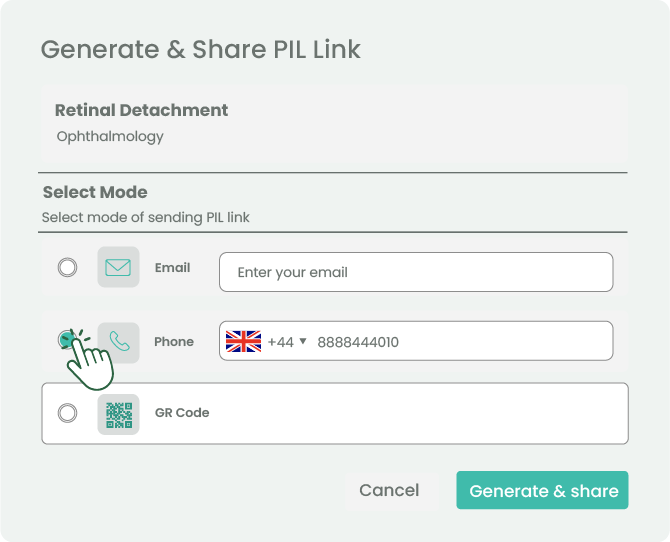
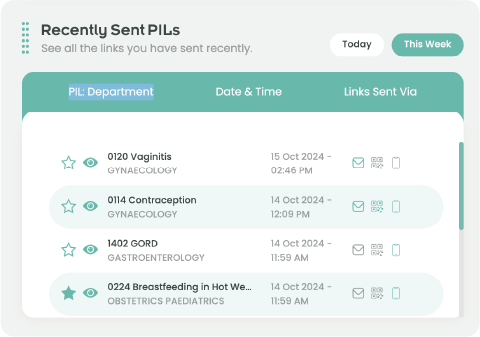
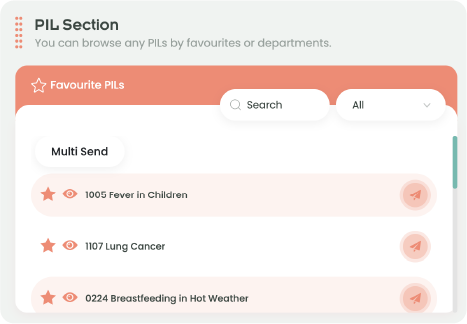
AMPM’s MINT Patient Education Platform is purpose-built for hospitals seeking to close this gap with clinical condition libraries covering hundreds of patient education topics, Arabic-language content, full EMR integration, and HCAHPS-aligned outcome reporting.
5. Digital Patient Engagement
Patient engagement spans every digital touchpoint in the care journey from pre-admission portal access and appointment scheduling to bedside interactive education, real-time care updates, post-discharge remote monitoring, and satisfaction feedback loops.
Patients who are actively engaged in their care demonstrate measurably better clinical outcomes, higher medication adherence, and stronger post-discharge compliance.
A structured digital engagement programme also reduces bedside nursing burden by answering routine patient queries through platform-delivered content rather than staff interruptions.This engagement is a vital metric for evaluating the maturity of digital transformation in healthcare. see patient engagement tools →
6. Healthcare Cybersecurity & Patient Data Governance
Far from being a localized IT concern, cybersecurity in healthcare has evolved into a critical board-level risk. According to IBM’s 2025 Cost of a Data Breach Report, the financial stakes are unprecedented: healthcare breaches now average $7.42 million per incident.
| $ 7.2 M Average breach cost for MEA organisations (2025)IBM MEA Cost of a Data Breach 2025 | 279 days Average breach identification and containment timeIBM 2025 |
| $1.76M Average cost saved by deploying AI-powered security toolsIBM 2025 | 17% of MEA breaches initiated via third-party/supply chain compromiseIBM MEA 2025 |
To mitigate these threats, hospital CIOs must pivot toward a more aggressive security posture. Key technical priorities include:
- Encryption: Implementation of robust protocols for data both at rest and in transit
- Access Control: Mandatory multi-factor authentication (MFA) across all clinical systems
- Proactive Defense: Deployment of AI-assisted threat detection to shorten response times
7. Healthcare Analytics & System Interoperability
Population health analytics, real-time bed utilisation dashboards, readmission risk stratification, and cost-per-pathway modeling are all achievable but only when clinical data systems are interoperable. The primary barrier for most hospitals is not data volume; it is data fragmentation across legacy systems that cannot communicate. For hospital CEOs: interoperability must be a non-negotiable procurement criterion for every future platform acquisition, not an afterthought resolved post-contract.
Building a Digital Transformation Roadmap: A 6-Step Framework

McKinsey’s cross-sector study identifies a consistent pattern among successful organisations: they start with a three-year, board-aligned vision before selecting any technology, prioritise by incremental clinical and financial ROI, and benchmark against both peer hospitals and digital leaders in adjacent industries. Deloitte’s research reinforces this: leadership alignment (80%) and implementation ownership (68%) are the strongest predictors of success, while organisational culture (60%) and unclear communication accountability (48%) are the leading causes of failure.
1. Conduct a Digital Maturity Assessment
Map your current state across all seven pillars. Identify siloed systems, paper-dependent workflows, and patient data vulnerabilities before setting targets or selecting vendors.
2. Define Clinical Outcomes First, Technology Second
The most common failure mode: selecting technology before defining outcomes. Start with measurable targets, for example: 30-day readmission rate, HCAHPS score, and accreditation readiness, then work backward to which digital investments deliver them.
3. Prioritise by Multi-Dimensional ROI
Digital patient education simultaneously reduces readmissions, improves patient satisfaction, reduces staff burden, and generates accreditation documentation.
4. Require Interoperability at Procurement
Mandate HL7 FHIR compliance and native EHR integration as contract requirements — not aspirational features. Post-implementation data integration is three to five times more expensive than building for interoperability from day one, , which is a common pitfall in digital transformation in healthcare.
5. Invest in Change Management and Structured Training
Technology without clinical adoption delivers zero value. Appoint clinical champions per department, invest in structured role-specific training, and measure adoption rates as a primary KPI alongside clinical outcomes.
6. Govern, Measure, and Iterate Quarterly
Establish a digital governance committee with board-level reporting to ensure the long-term sustainability of digital transformation in healthcare. Review KPIs quarterly. Deprioritize low-adoption projects and reallocate resources to initiatives delivering measurable clinical and financial value.
The 5 Most Common Barriers and Evidence-Based Mitigations
PMC-published research on digital transformation in healthcare identifies five recurring barrier categories that cut across geographies and system sizes.
| Barrier | Root Cause | Evidence-Based Mitigation |
| Culture & Clinical Resistance | Scepticism about workflow disruption; fear of accountability transparency | Identify clinical champions per specialty; run peer-to-peer demonstration before system-wide rollout |
| Governance Ambiguity | Siloed decision-making; no single owner of digital outcomes | Appoint a Chief Digital Officer (CDO) with board-level access and cross-departmental mandate |
| Regulatory & Compliance Exposure | Patient data privacy, clinical safety liability | Require ISO 27001 / SOC 2 certification from all vendors and embed legal and compliance review into every procurement cycle |
| Digital Skills Gap | Insufficient HIT literacy in clinical and administrative teams | Mandate structured role-specific training for all users; measure adoption rate as a board KPI |
| Legacy System Fragmentation | Non-interoperable systems; poor data quality | Require HL7 FHIR compliance in all new procurement; build a phased migration plan away from isolated systems |
Digital Transformation & Hospital Accreditation Readiness
JCI, CBAHI, and equivalent national accreditation bodies increasingly expect digital documentation of patient education, clinical workflows, and safety protocols. The evidence threshold has risen paper-based systems can no longer produce the volume, consistency, and real-time traceability that modern auditors require.
Digital patient education platforms simultaneously satisfy multiple JCI chapters: PFR (patient rights and responsibilities), PFE (patient and family education), and QPS (quality improvement and patient safety). Every educational interaction is automatically documented, indexed by patient, diagnosis, and clinician, and retrievable during a survey without manual record compilation.
| Accreditation-Ready by Design AMPM’s MINT Platform generates accreditation-ready patient education reports for JCI and CBAHI as a native feature not a manual export .See: Patient Education and Hospital Accreditation |
Conclusion: Digital Transformation in Healthcare Starts With a Decision
Digital transformation in healthcare is not a destination. Instead, it is a long-term strategic advantage that grows with consistent investment. The hospitals that will lead in 2030 are making critical decisions today like selecting interoperable platforms, driving clinical adoption through training, and measuring outcomes that matter to patients, accreditors, and leadership.
This guide outlines the seven pillars of a digitally mature hospital, from EHR systems and AI-powered decision support to one of the highest-impact yet underused areas: digital patient education. The evidence is clear. Hospitals that digitise patient education reduce readmissions, improve HCAHPS scores, lower staff workload, and generate accreditation-ready documentation automatically.
The six-step roadmap provided is practical at any stage of digital maturity. Whether starting from scratch or scaling existing systems, the approach remains consistent: define clinical outcomes first, select technology second, and maintain strong governance.
While challenges such as culture, legacy systems, and skill gaps are real, they are solvable. Successful hospitals treat digital transformation as a clinical strategy, not just an IT initiative.
The question is no longer whether to pursue digital transformation in healthcare. It is how fast and with which partner.
| Ready to Lead Digital Transformation in Healthcare? See how AMPM’s MINT Platform helps hospital leaders digitalise patient education, meet JCI and CBAHI accreditation requirements, and improve clinical outcomes with full EMR integration and Arabic-language content. Book a Demo |
Frequently Asked Questions
What is digital transformation in healthcare?
Digital transformation in healthcare is the system-wide integration of technologies: EHRs, AI, telehealth, and digital patient education, to fundamentally redesign how care is delivered, documented, and experienced. Unlike digitisation (converting paper to digital), true transformation rethinks care delivery models and patient journeys with technology as the operating foundation, not a support layer.
What are the biggest barriers to digital transformation in hospitals?
Peer-reviewed research identifies five primary barriers: organisational culture and clinical resistance (cited by 60% of respondents); lack of change management ownership (48%); legacy system fragmentation; insufficient digital skills in clinical teams; and regulatory compliance risk.
How does digital patient education improve hospital outcomes?
Digital patient education improves health literacy, medication adherence, and post-discharge compliance , directly reducing avoidable readmissions for conditions such as diabetes, heart failure, and asthma. It also generates structured, auditable documentation satisfying JCI standards PFR and PFE. Hospitals using digital platforms simultaneously improve HCAHPS scores and produce accreditation-ready evidence from every patient interaction.
How does digital transformation support JCI and CBAHI accreditation?
Digital platforms enable hospitals to automatically document every patient education interaction like creating auditable, patient-specific records retrievable during surveys. This directly satisfies JCI chapters PFR, PFE, and QPS. Paper-based documentation cannot meet the volume, consistency, and real-time retrieval standards that modern JCI and CBAHI surveys expect.
References
- Charalambous, A. (2024). Digital transformation in healthcare: Have we gone off the rails? Asia-Pacific Journal of Oncology Nursing, 11(5), 100481.
- WHO (2021). Global strategy on digital health 2020–2025. World Health Organization.
- TechSci Research (2025). Saudi Arabia Digital Health Market Report.
- ScienceDirect (2025). Meta-analysis of electronic health records and their effect on diagnostic and medication errors.
- McKinsey & Company (2022). Driving digital transformation in healthcare.
- NHS England (2024). Plan to cut avoidable admissions and reduce waiting times.
- Galazzi et al. (2025). Recommendations to promote digital healthcare transformation. BMC Health Services Research.
- IBM (2025). Cost of a Data Breach Report Middle East Findings.