

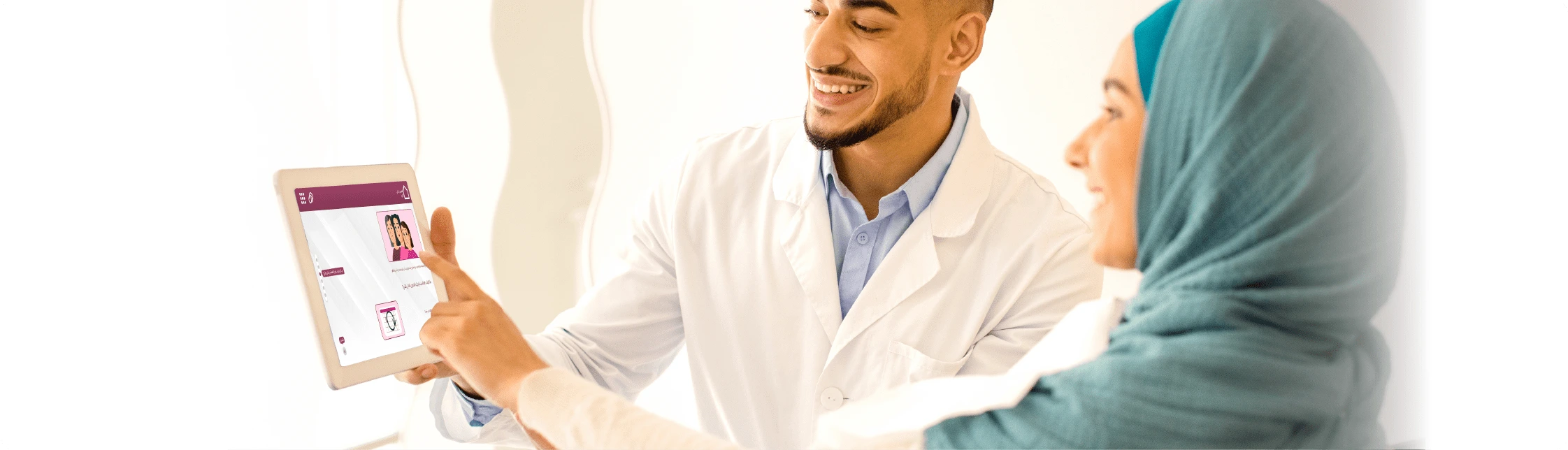
Patient information leaflets in Arabic are essential for serving the MENA region and for providing patient education.
There is no dearth of health information in Arabic, and translations, whether manual or using specialised platform, are also available for patient education purposes in the region.
Yet, writing for Arabic speakers is not about putting information on paper; it is about reaching them, as it is for English speakers.
Importance of Readability in Patient Information Leaflets in Arabic
Readability improvement is a key factor in refining patient information leaflets in Arabic to ensure comprehension, engagement, and proper patient education outcomes across diverse literacy levels.
At AMPM Training, we encounter various captivating challenges. One of them is the readability measure of our material.
For English, we use the Flesch-Kincaid system. Although it has limitations, it works well for our style of patient information leaflets, particularly because it effectively conveys complex medical information in a clear and accessible manner for our target audience.
Studies on Arabic readability mostly rely on systems designed for foreign readers. They do not accurately assess text for native Arabic readers.
Far less independent research has validated Arabic readability tools, whereas English systems have undergone extensive testing and verification for accuracy and reliability.
Our patient education material relies heavily on illustrations. We use very few paragraphs and simple sentences to make content easier to read and understand.
Hence, using a simple algorithm like Flesch-Kincaid for English is feasible, while parallel algorithms for Arabic, such as Dawood or Al-Heeti, are far less forgiving in practical application due to the complexity of the language structure and the unique characteristics of Arabic script.
When testing our material, we found that the readability scores for Arabic content can be deceptive, because simple metrics do not accurately capture visual-based educational layouts in leaflets.
The lack of readily available software to assist with Arabic readability evaluation was another significant hurdle that we faced in producing high-quality patient materials consistently.
At AMPM Training, we prefer the OSMAN readability Metric. This system considers diacritics and furthermore, there is an available validated software that assists with the process.
Challenges of Diacritics in Patient Information Leaflets in Arabic
Diacritics present additional challenges, as they influence pronunciation, meaning, and comprehension in patient education materials written in Arabic for diverse audiences.
How Diacritics Affect Meaning
For non-Arabic readers, diacritics are marks on Arabic letters that determine pronunciation, functioning almost like vowels, and they can change the meaning of a word completely in context.
Examples of diacritics:
- “دَين” means debt
- “دِين” means religion
Managing Sentence Length with Diacritics
We carefully watch for words that may be misread due to diacritics. Avoiding such words can increase sentence length while keeping the intended meaning intact.
Increasing the number of words per sentence raises the readability level, creating an interesting conundrum that we consistently struggle with when designing patient leaflets in Arabic.
Managing diacritics effectively strengthens patient information leaflets in Arabic, ensuring that meaning is clear, accurate, and culturally appropriate for all native readers.
Dialects and Regional Variations in Arabic Patient Education

Regional variations and dialects influence comprehension, meaning, and engagement when producing patient information leaflets in Arabic for a broad audience.
Modern Standard Arabic vs Colloquial Usage
Though Modern Standard Arabic is consistent across Arabic-speaking countries, many words are uncommon in daily use, and some terms can be difficult for ordinary readers to understand fully.
Modern literature increasingly uses colloquial Arabic in dialogue, which influences reader expectations and comprehension, especially when patient education materials are presented in standard rather than spoken forms.
Dialogue Format in Patient Education Materials
When writing patient education materials, we aim for a dialogue form to engage readers, enhance understanding, and improve recall, while maintaining clarity and cultural relevance for all patients.
Yet dialogue in standard Arabic may appear alien, reducing the collaborative effect that we aim for in engaging and educational interactions with readers in our leaflets.
Dialogue examples:
- “ما هي الفوائد المرجوة من عمليات رأب الجفن”
- “ما فائدة عمليات شد الجفن”
Addressing dialect variation is essential for effective patient information leaflets in Arabic, ensuring comprehension, engagement, and cultural sensitivity.
Foreign Words and Cultural Sensitivity in Arabic Patient Leaflets
Foreign words are another consideration, as they can affect how readers perceive patient education material and influence trust, engagement, and understanding.
Borrowed Words vs Arabic Equivalents
Many borrowed words have Arabic equivalents, yet the English-derived terms are more commonly used, accepted, or familiar to readers in some contexts.
Some words are widely accepted, while others may create negative reactions, as excessive foreign terminology could be viewed as threatening cultural identity or Arabic language preservation.
Examples of foreign vs Arabic words:
- “كاميرا” Vs “آلة التصوير”
- “الميكرسكوب” Vs “المجهر”
Importance of Word Choice in Patient Education
Considering reader reactions is important, as inappropriate word choice can distance material from those who need it most, while careful selection balances accessibility and cultural preservation.
Word sensitivity plays a major role in developing patient information leaflets in Arabic that are trusted, culturally appropriate, and widely understood.
Conclusion
Simply translating patient information reduces its value, because writing in another language requires specialist knowledge, time, effort, and validation.
Surveying Arabic-speaking patients ensures comprehension and usability. Collaboration with local producers improves quality, relevance, and engagement.
Patient education remains a key preventive measure, and language differences should never hinder understanding.
Developing accurate, culturally aware patient information leaflets in Arabic supports patients in this large region, improves outcomes, and builds trust.